
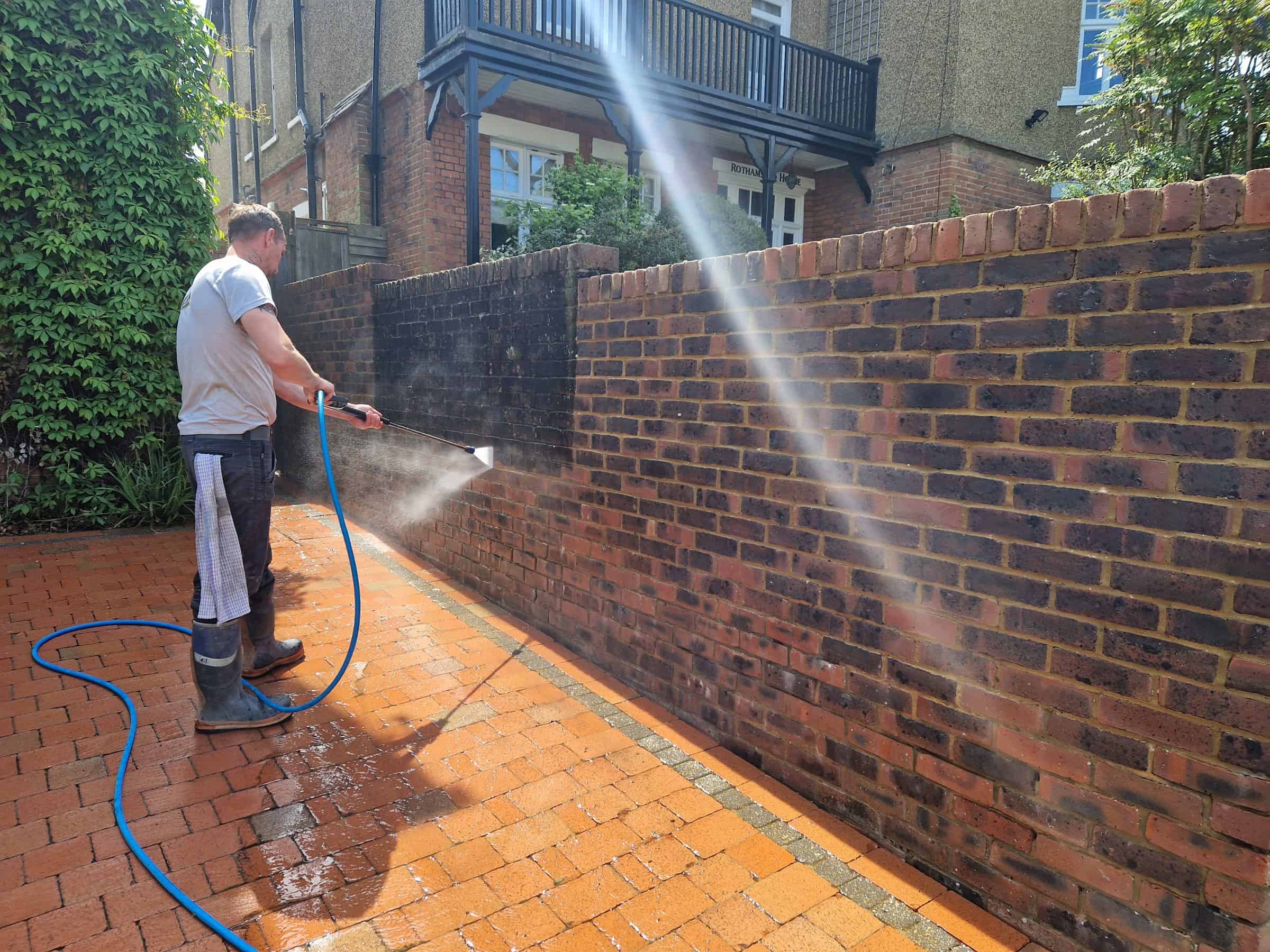
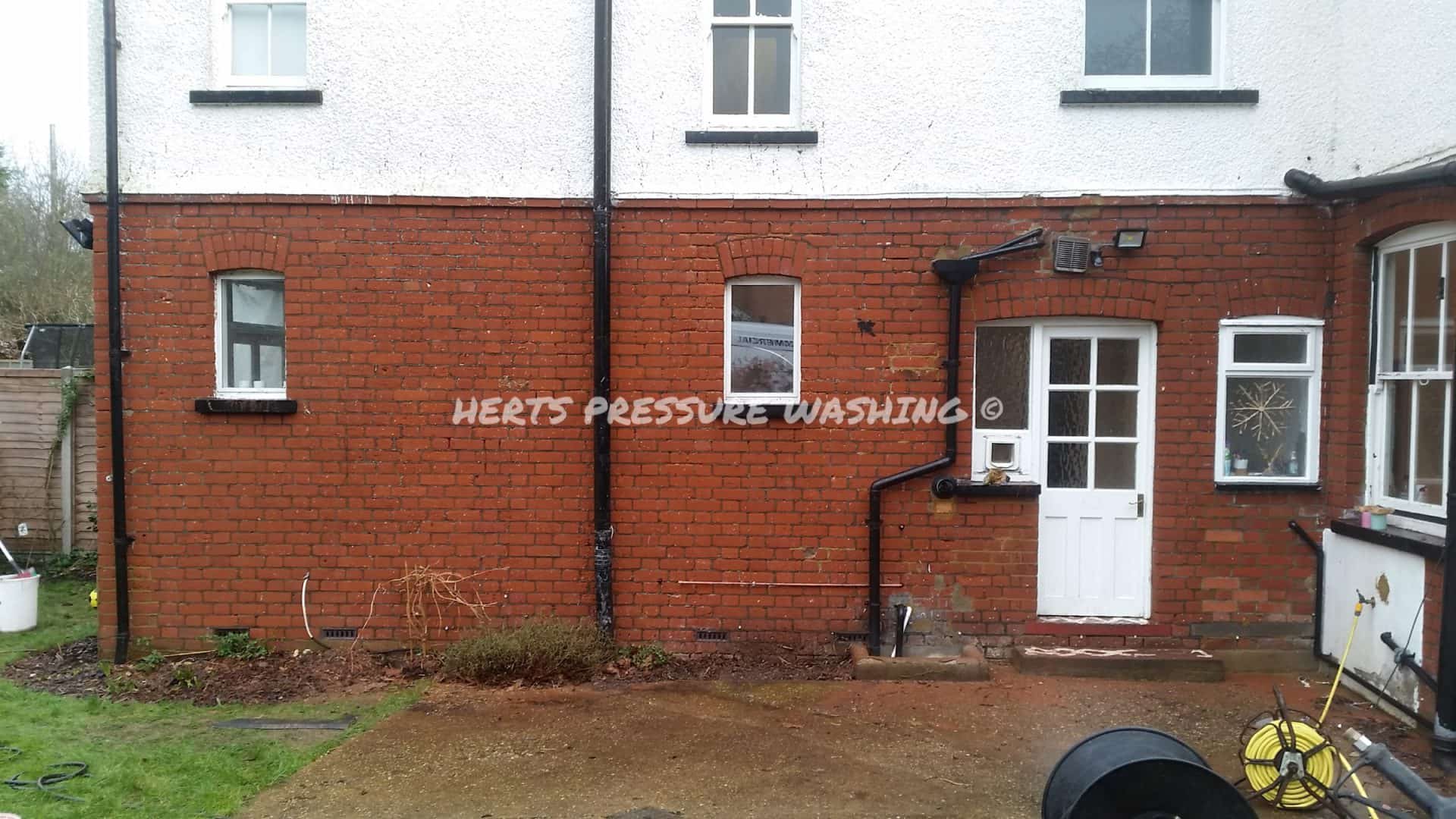
Red brick house frontage after water staining has been cleaned off the brickwork
What we do

Brickwork cleaning – stain removal

Brick cleaning is the removal of carbon staining, atmospheric dirt, algae, mould and other organic growth from brickwork and stone, so the masonry reads as its original colour again. Herts Pressure Washing has been cleaning brick and stone across Hertfordshire, Bedfordshire and NW London since 2008, for private houses and for public buildings alike.

Most brickwork does not need high pressure. It needs the right chemistry, applied at the right strength and left long enough to work. We are trained in the different chemicals brickwork takes – biocides for organic growth and acids for carbon and mortar staining – and in recognising the walls where neither belongs. Where masonry is soft, historic or already pitted or damaged, you get told that before the quote rather than after the job.
Surfaces

Brick and stone we work on

The stain tells us what to use. The masonry tells us what we are allowed to use. These are the surfaces we are asked for most.

Facing brickwork

Modern facing brick on houses, boundary walls and commercial frontages, brought back to an even colour across the elevation.

Older, softer brick

Victorian and earlier brick, where the face is fragile and the method has to be gentler than the staining suggests.

Natural stone

Stone elevations, sills, copings, porches and steps, cleaned at a pressure the stone can take.

Reconstituted stone

Cast stone and concrete blockwork, which stain differently from clay brick and have to be cleaned differently too.

Walls, pillars and steps

Boundary walls, gate pillars and thresholds – the parts of a frontage people are standing next to when they judge it.

Commercial frontages

Shop fronts, housing estates and public buildings, cleaned to a schedule with RAMS supplied on request before we arrive.

Find out more

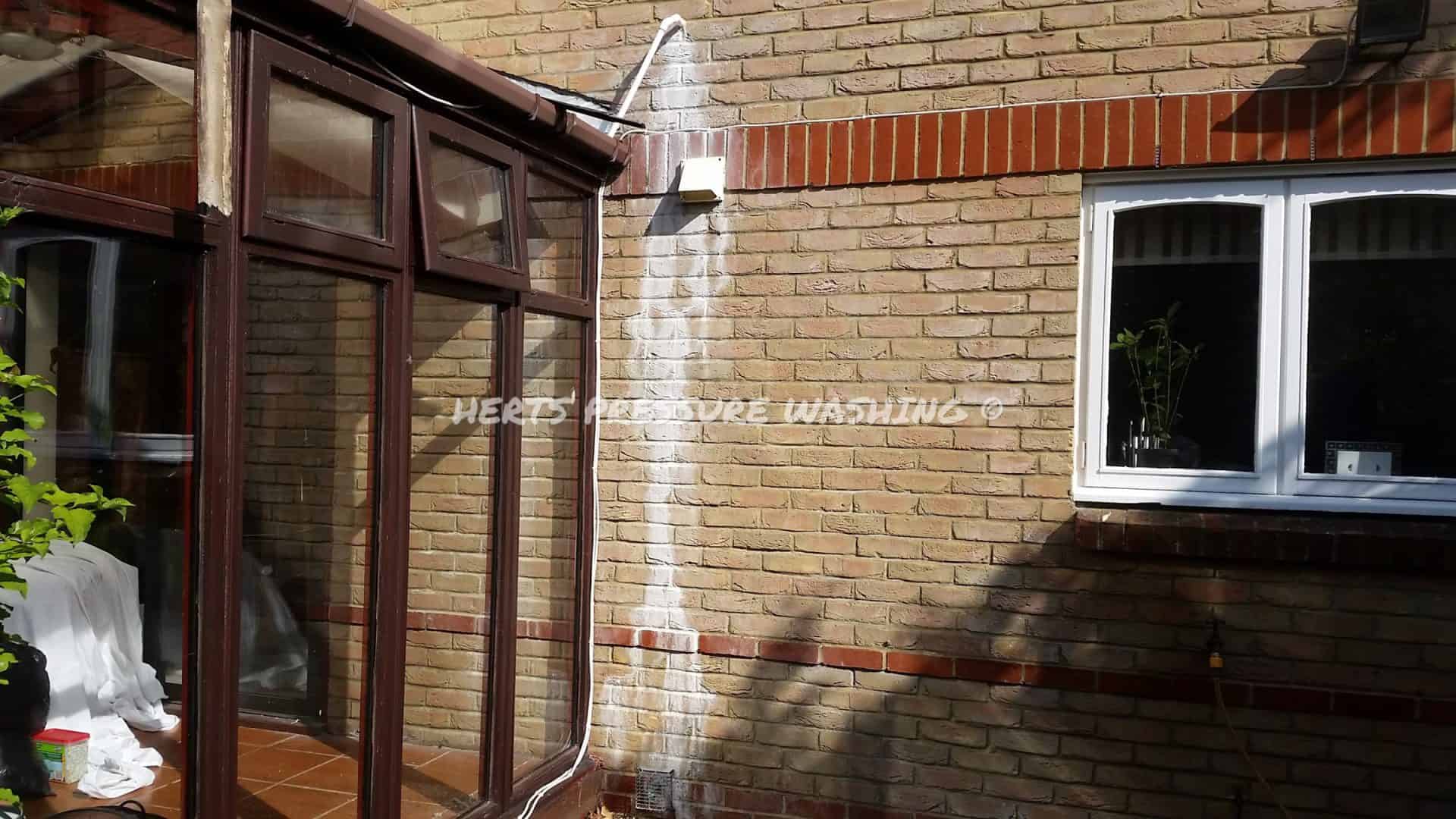
Staining on a yellow brick wall before cleaning
Specialist work

Carbon stain removal

Carbon staining is the black weathering that builds on brick and stone from traffic fumes, soot and years of rainwater running the same route down a wall. It sits in the face of the brick rather than on it, which is why a jet wash takes off the loose dirt and leaves the stain exactly where it was.

Shifting it is an acid job, done carefully: the right dilution for that brick, applied in controlled sections, with glass, frames, planting and paving protected first and everything rinsed out properly afterwards. It is the part of this trade with the most scope to ruin a building, which is why we are trained in it and why some walls get a polite no.

How it works

From photo to clean elevation

1

Send a photo of the elevation

A picture of the wall and a rough idea of its size is enough to price most brick and stone work.

2

Method matched to the masonry

Biocide for organic growth, acid for carbon staining, low pressure and patience for anything soft or historic.

3

Protect what is around it

Glass, frames, planting and paving are covered or wetted down before anything is applied to the wall.

4

Clean, rinse and check in daylight

The wall is worked in sections and rinsed thoroughly so nothing is left sitting in the brick, then checked before we pack up.

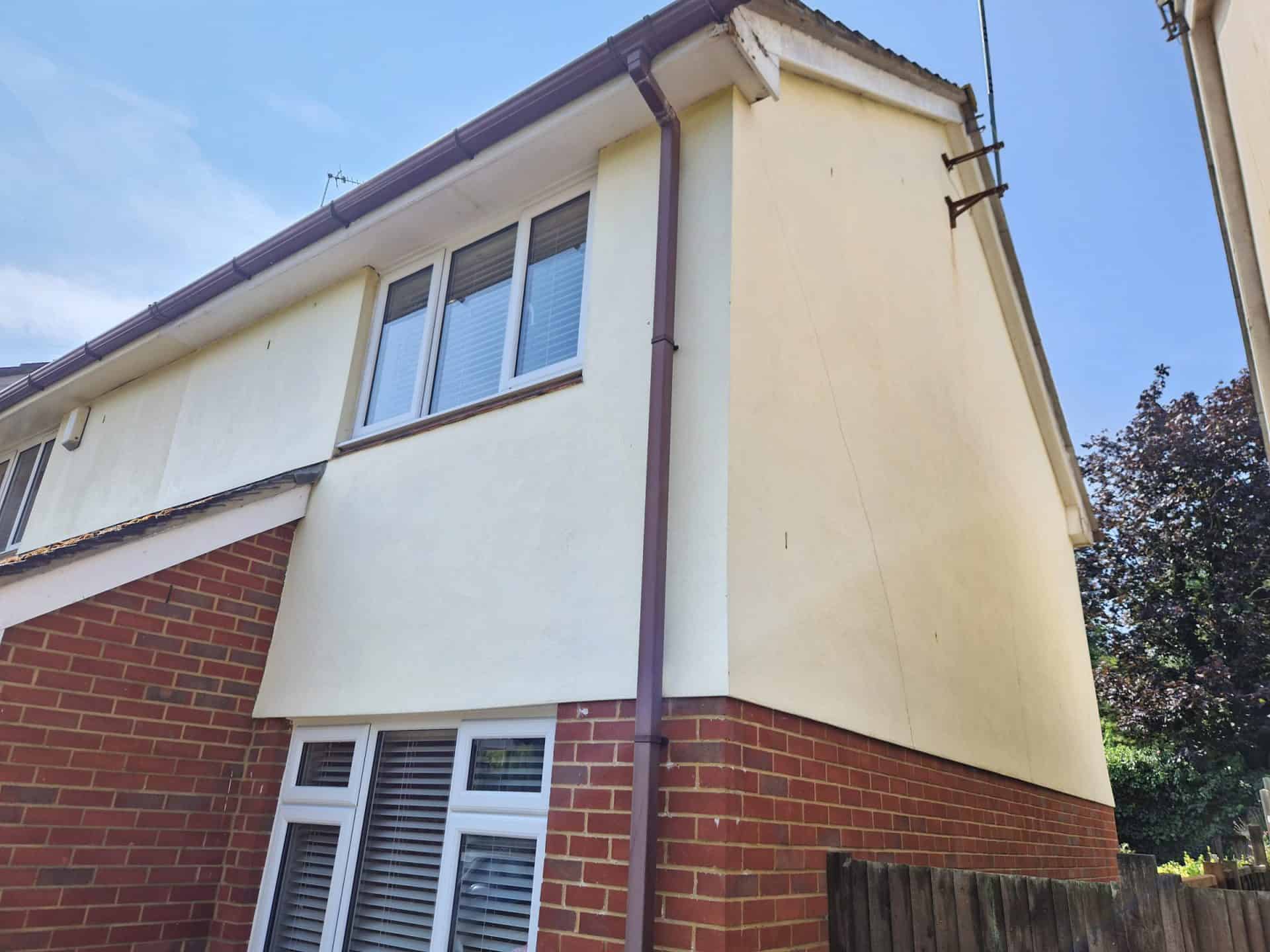
House with cream render above exposed brickwork after cleaning, showing the two surfaces together
Not the same job

If it is not brick, it is a different method

Rendered walls are cleaned by soft washing – low pressure and a biocidal treatment that kills the growth at the root. Paint and graffiti on masonry are a different job – paint stripper and steam rather than a stain-removal clean – covered under graffiti and paint removal. We will tell you which one your wall actually needs, and it is not always the one you rang about.

Brick and stone cleaning across the county and beyond

Our brickwork and stone restoration covers Harpenden and the surrounding area: Hertfordshire, Bedfordshire and NW London. Trading since 2008 and CSCS accredited, we are insured to £5m with Hiscox and named and trusted as an approved contractor by seven councils and organisations, among them St Albans City and District Council and Hertsmere Borough Council.

What customers say
  • “Excellent service and results!! Would highly recommend! Thanks Alex!!”

    Dawn Walsh

FAQs

Brick and stone cleaning questions

Can’t see your question here? Give us a call or drop us a message on WhatsApp and we’ll give you a straight answer.


Carbon staining is black weathering caused by traffic fumes, soot and rainwater tracking down the same part of a wall for years. It sits inside the face of the brick rather than on the surface, so washing lifts the loose dirt and leaves the stain. Removing it properly is a chemical job.

Not if the method suits the brick. Older brick has a softer face and is cleaned at low pressure with more treatment and more time. The damage people show us on period properties is almost always caused by a lance held too close, not by the chemicals.

Yes, where the staining calls for it and the brick will take it. We are trained in a range of masonry acids, mix them to the dilution that brick needs, protect glass, frames and planting first and rinse everything out afterwards. On soft or historic masonry we use something gentler or decline the job.

Most of it should be. Organic growth is killed with a biocide and rinsed at low pressure, and ingrained staining is treated chemically. High pressure is not needed on brickwork, and using it is what causes pitting and blown faces.

Yes. Stone elevations, sills, copings, porches, steps, gate pillars and reconstituted cast stone are all part of this service. Stone stains and cleans differently from clay brick, so the treatment is chosen for the material in front of us.

Yes, but it is a different job from stain removal – trade-strength paint strippers and steam at up to 120°C rather than a chemical wash. Paint, graffiti and overspray on masonry are covered on our graffiti and paint removal page.

There is no square metre rate. A wall is priced on its size, the type of staining, the masonry itself and the access, so a soot-blackened Victorian frontage is a very different job from a modern wall that has gone green. Domestic work starts at £250 and there is no VAT.

No. We repoint patios, replacing failed cement pointing with a resin pointing that does not crack out, but we do not repoint brick or stone walls.

That depends on the wall. A north-facing elevation under trees greens up faster than a sunny frontage, so it may need cleaning every few years. Carbon staining takes several decades to form, so once it has been removed it is not a job you will need to repeat.

Get in touch

Get a fast, no-obligation quote

Send us a couple of photos on WhatsApp and we’ll come back with a price – usually the same day.

Established 2008

4.9★ from 80 Google reviews

Council approved